Mardi Himal Trek Guide 2027: Route, Permits, Best Season and Cost
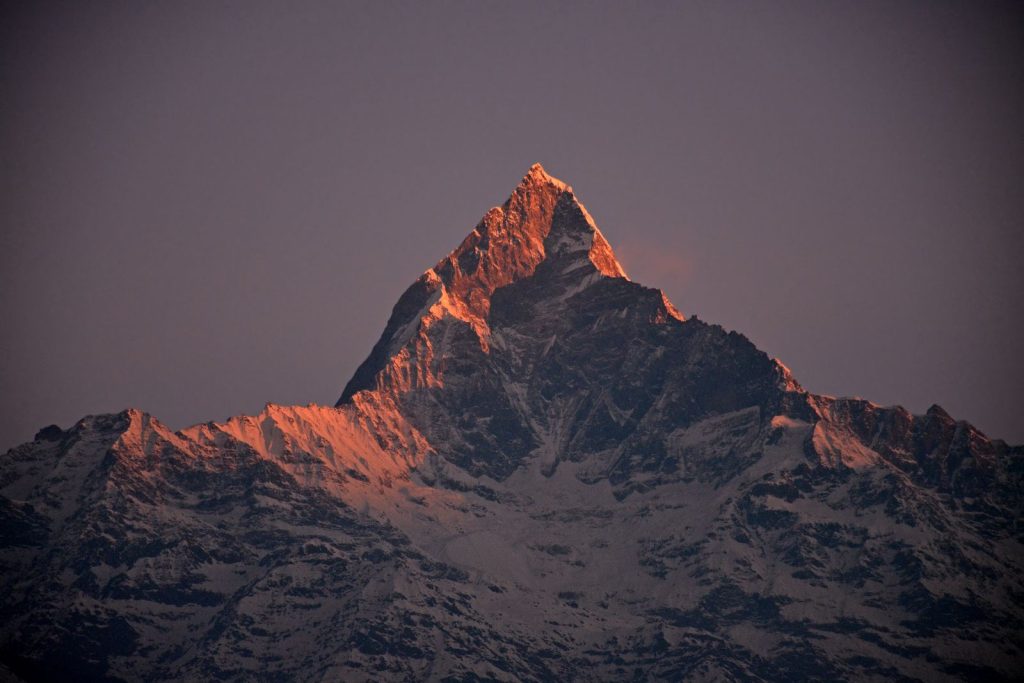
The Mardi Himal trek follows a long, quiet ridge beneath Machhapuchhare, the fishtail peak, and ends at the Upper Viewpoint at about 4,200 meters. It sees far fewer trekkers than the main Annapurna trails, the walking is steady rather than technical, and the views of Machhapuchhare, Mardi Himal and the Annapurna range are close and wide. It is a good second trek in Nepal, or a first one if you are fit and happy to walk uphill for several hours a day.
The short version
- Highest point: Upper Viewpoint, about 4,200 m (Mardi Himal Base Camp is often quoted at about 4,500 m)
- Trekking days: five, roughly 40 to 55 km on foot
- Difficulty: moderate. Steady climbs, a narrow upper ridge, no climbing skills needed
- Best seasons: March to May and late September to November
- Our price: from US$792 per person for the 9-day plan, including Kathmandu and Pokhara
The route, day by day
Day 1: Arrive in Kathmandu (about 1,350 m). We meet you at the airport, take you to your hotel and hold a briefing on the route, gear and permits.
Day 2: Drive or fly to Pokhara (about 820 m). Go by road through the river valleys (6 to 7 hours) or fly across the hills. Spend the afternoon by the lake and finish packing.
Day 3: Drive to Kande, trek to Deurali (about 2,100 m). A short drive takes you to Kande. You walk up through villages and farmland to the ridge at Deurali, often called Australian Camp, with the first views of the Annapurna range. Walking: 3 to 5 hours.
Day 4: Deurali to Forest Camp (about 2,550 m). You climb steadily through thick rhododendron and oak forest along the ridge. The trail is quiet and the views open up near the lodge. Walking: 4 to 6 hours.
Day 5: Forest Camp to Low Camp and High Camp (about 3,000 m and 3,550 m). You leave the forest for open ridge, pass Low Camp and continue to High Camp, where Machhapuchhare and Annapurna South stand across the valley. Go slowly and drink plenty of water. Walking: 5 to 7 hours.
Day 6: Upper Viewpoint and back to High Camp (about 4,200 m). You start before dawn and climb the narrow ridge to the viewpoint for sunrise, then return to High Camp for breakfast and a rest. Ridge conditions decide how far we go. Walking: 5 to 7 hours.
Day 7: High Camp to Siding (about 1,700 m), drive to Pokhara. A long descent past Low Camp and along the Mardi Khola river brings you to Siding, where a jeep takes you back to Pokhara. Walking: 5 to 6 hours, then 2 to 3 hours by road.
Day 8: Return to Kathmandu. By road (6 to 7 hours) or a short flight, with a free afternoon.
Day 9: Departure.
Altitudes and times are approximate. Lodge names and the exact position of the camps differ between sources and change from year to year. Snow or cloud can close the upper ridge, and we will tell you honestly if conditions mean turning back early.
Permits
For Mardi Himal you normally need an Annapurna Conservation Area permit and a TIMS card, and a licensed guide is usually required. Published fees have been about NPR 3,000 for the ACAP permit and about NPR 3,000 for TIMS booked through an agency, but fees and rules change, so please check the current amounts with us before you travel. We arrange the permits for our guests. See our guide to Nepal trekking permits for the full picture.
Best time to go
March to May is warm, with rhododendron in bloom on the lower ridge. Late September to November gives the clearest skies and the best mountain views. June to August is monsoon, with rain, cloud and leeches in the forest. December to February is cold and snow can close the upper ridge. Our best time to trek in Nepal guide compares the seasons.
How hard is it?
Moderate. Days are 4 to 7 hours with steady climbs, and the final section above High Camp is steep and exposed in places. You do not need climbing skills, but you should be comfortable walking uphill for several hours. Lodges along the ridge are simple, with basic rooms and limited hot water, and facilities become more basic as you climb. Sleeping at about 3,500 m to 3,900 m asks for sensible acclimatization: walk slowly, drink plenty of water and tell your guide at once if you feel unwell.
What does it cost?
Our 9-day Mardi Himal trek starts from US$792 per person. That is about US$88 per day for a fully guided and organized trip with hotels in Kathmandu and Pokhara, teahouse lodges on the trail, permits and transfers. Prices depend on group size and season, and we confirm the final price when you enquire. A 20% deposit secures your booking.
Mardi Himal or Poon Hill?
Choose Poon Hill if you want an easier, lower trek with short days (see our Poon Hill trek guide). Choose Mardi Himal if you want a quieter ridge, higher views and are ready for longer days. You can see all our routes on the Annapurna region page.
Ready to plan it? See the Mardi Himal trek package, or message us on WhatsApp +81 70 2232 4287.
Frequently asked questions
How many days is the Mardi Himal trek?
Our plan takes 9 days including Kathmandu and Pokhara, with five days on the trail.
How high is the Mardi Himal trek?
The Upper Viewpoint is at about 4,200 m. Mardi Himal Base Camp is often quoted at about 4,500 m, and sources differ, so ask us which point your plan reaches.
Do I need a permit and a guide for Mardi Himal?
You normally need an Annapurna Conservation Area permit and a TIMS card, and a licensed guide is usually required. We arrange the permits for our guests, and we confirm current fees before you travel.
How much does the Mardi Himal trek cost?
Our 9-day trek starts from US$792 per person, about US$88 per day, with a 20% deposit to book.
Related guides
Tell us your dates and we will reply with a clear itinerary and price.
WhatsApp usSee all treks